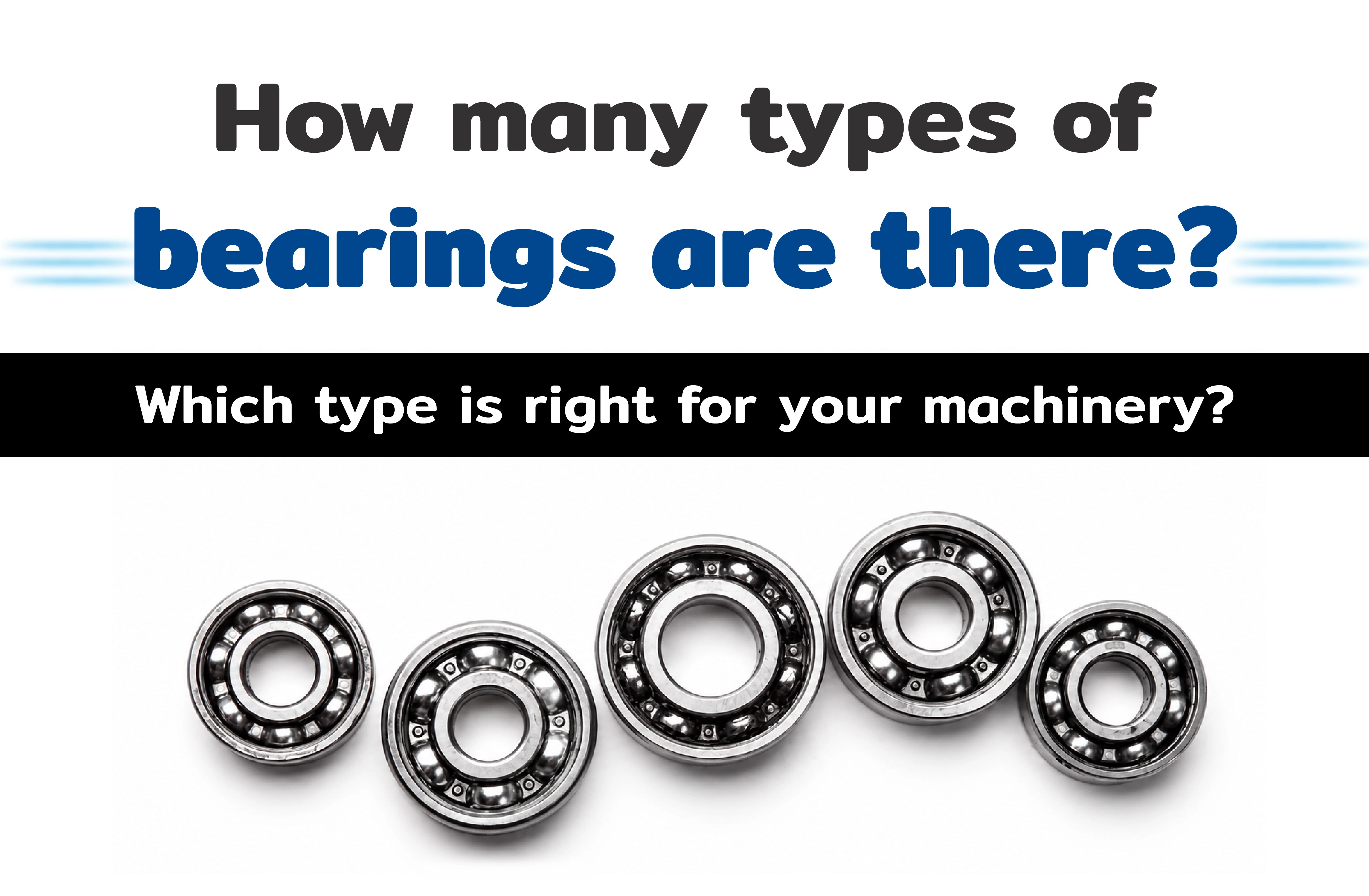
How many types of bearings are there and Which type is right for your machinery?
Bearings are essential components in machinery, industrial equipment, and rotating systems. Their primary function is to reduce friction, support rotational movement, and ensure smooth machine operation. Although bearings may be relatively small components, selecting the wrong type for the application can lead to problems such as excessive vibration, abnormal noise, overheating, and premature equipment failure.
 ยาวไปอยากเลือกอ่าน
What is a bearing?
What is a bearing?
|
|
A bearing is a mechanical component designed to support the rotation or movement of a shaft. It helps reduce friction between moving parts, allowing machinery to operate smoothly, efficiently, and with less wear.Bearings are essential components in industrial machinery, automotive systems, electric motors, water pumps, fans, and almost any equipment that involves rotational movement. Depending on their design and application, bearings can support both radial loads and axial loads, ensuring reliable performance under various operating conditions.
|
Example Bearing Image
|
Main Components of a Bearing
Main Components of a Bearing
Bearing Components consist of several critical parts working together, each playing a vital role in reducing friction, supporting loads, and enhancing machinery performance. They ensure smooth shaft rotation, and the main components are as follows:
•
Inner Ring Mounted directly onto the shaft, it rotates together with the shaft and supports the loads generated during operation.
•
Outer Ring Installed within the housing, it supports loads and serves as the raceway for the balls or rollers.
•
Ball or Roller These components reduce friction between the inner ring and outer ring, allowing smooth and efficient rotation.
•
Cage / Separator It functions to hold and space the balls or rollers at proper intervals, reducing friction between the rolling elements.
•
Seal / Shield It functions to protect against dust, moisture, and contaminants from entering the bearing, while helping to retain the lubricant.
How Many Types of Bearings Are There?
How Many Types of Bearings Are There?
Bearings are available in various types, each designed to suit different load conditions, operating speeds, and machinery applications. Selecting the right bearing type can significantly reduce wear, improve performance, and extend the service life of equipment. In general, bearings can be classified into three main categories based on their rolling element design and load-carrying characteristics, as follows:
• Ball Bearing Category
Ball Bearing Ball bearings use spherical rolling elements to reduce friction between the inner and outer rings. They are ideal for applications requiring high rotational speeds, smooth operation, and low friction. Capable of supporting both radial loads and a moderate amount of axial loads, they are the most widely used bearing type in industrial and general equipment.
• Roller Bearing Category
Roller Bearing Roller bearings utilize rollers instead of balls, providing a larger contact area that allows them to support heavier loads and greater forces than ball bearings. They are ideal for heavy-duty applications involving high loads or severe impacts. This category of bearings is primarily designed to handle radial loads, though certain types can also accommodate axial loads.
• Thrust Bearing Category
Thrust Bearing Thrust bearings are specifically designed to support axial loads or thrust forces along the shaft. They are not well-suited for handling radial loads. These bearings are commonly used in machinery subjected to high vertical pressure or heavy axial thrust, ensuring smooth rotation and reducing wear and tear on components.
Why Is It Important to Use High-Quality Bearings?
Why Is It Important to Use High-Quality Bearings?
Choosing high-quality bearings is critical for machinery efficiency and safety. They reduce friction and wear, efficiently support loads, ensure smooth operation, and minimize the risk of sudden breakdowns or unexpected downtime. Furthermore, premium bearings lower maintenance costs, extend equipment lifespan, and maximize long-term value, making them a key factor in keeping production lines running continuously at peak efficiency. Boonsan Fastener Limited Partnership (BSF Fastener) supplies high-quality bearings and industrial equipment, backed by expert advice from a team with real-world experience in machinery and industrial applications.
How to Choose the Right Bearing for Your Application
How to Choose the Right Bearing for Your Application
Choosing the right bearing for your application is essential for improving machinery performance, reducing
wear, and extending equipment service life. If the wrong bearing is selected, it may fail prematurely, leading
to reduced efficiency, increased maintenance costs, and unexpected downtime.
Key Factors to Consider
• Consider the Type of Load Applied.
• Check the Operating Speed (RPM).
• Select the Appropriate Bearing Size.
• Consider the Operating Environment.
• Choose the Right Bearing Type for the Application.
• Select Reputable Manufacturers and Industry-Standard Bearings.
FAQ
FAQ
01
Which type of bearing is the most commonly used?
Ball bearings are the most commonly used type of bearing because they are versatile and suitable for a wide range of applications.
02
What applications are tapered roller bearings suitable for?
Suitable for high-load applications, such as automotive systems and heavy machinery.
03
When should a bearing be replaced?
If there is loud noise, vibration, or excessive heat, it should be inspected and replaced immediately.
04
What happens if the wrong type of bearing is used?
Using the wrong type of bearing can lead to accelerated wear, machinery damage, and unplanned downtime.
Summary

สรุป
Bearings are essential components that support rotation, reduce friction, and enhance machinery efficiency. Each type is specifically engineered to suit different load characteristics and applications. Selecting the right bearing requires careful consideration of the load type, load capacity, rotational speed, operating environment, and installation dimensions to ensure machinery operates at peak performance and achieves a long service life. Furthermore, choosing high-quality, standardized bearings helps reduce wear and tear, lowers maintenance costs, improves safety, and ensures continuous production with maximum long-term efficiency.


 My Cart


 All Products
 Fasteners

 Pneumatic Fittings
 Brass Fittings
 Hand tools
 Bearings and Grease
 Electrical Terminal


 Zinc Plating
 Nut and Screw
 Product Packaging






 Boonsanfast
  @boonsanfast
  www.boonsanfasteners.com
  ecom_order@boonsanfasteners.com