My Cart


 All Products
 Fasteners

 Pneumatic Fittings
 Brass Fittings
 Hand tools
 Bearings and Grease
 Electrical Terminal

 Zinc Plating
 Nut and Screw
 Product Packaging


5 Common Mistakes Beginners Make When Choosing Fasteners
5 Common Mistakes Beginners Make When Choosing Fasteners
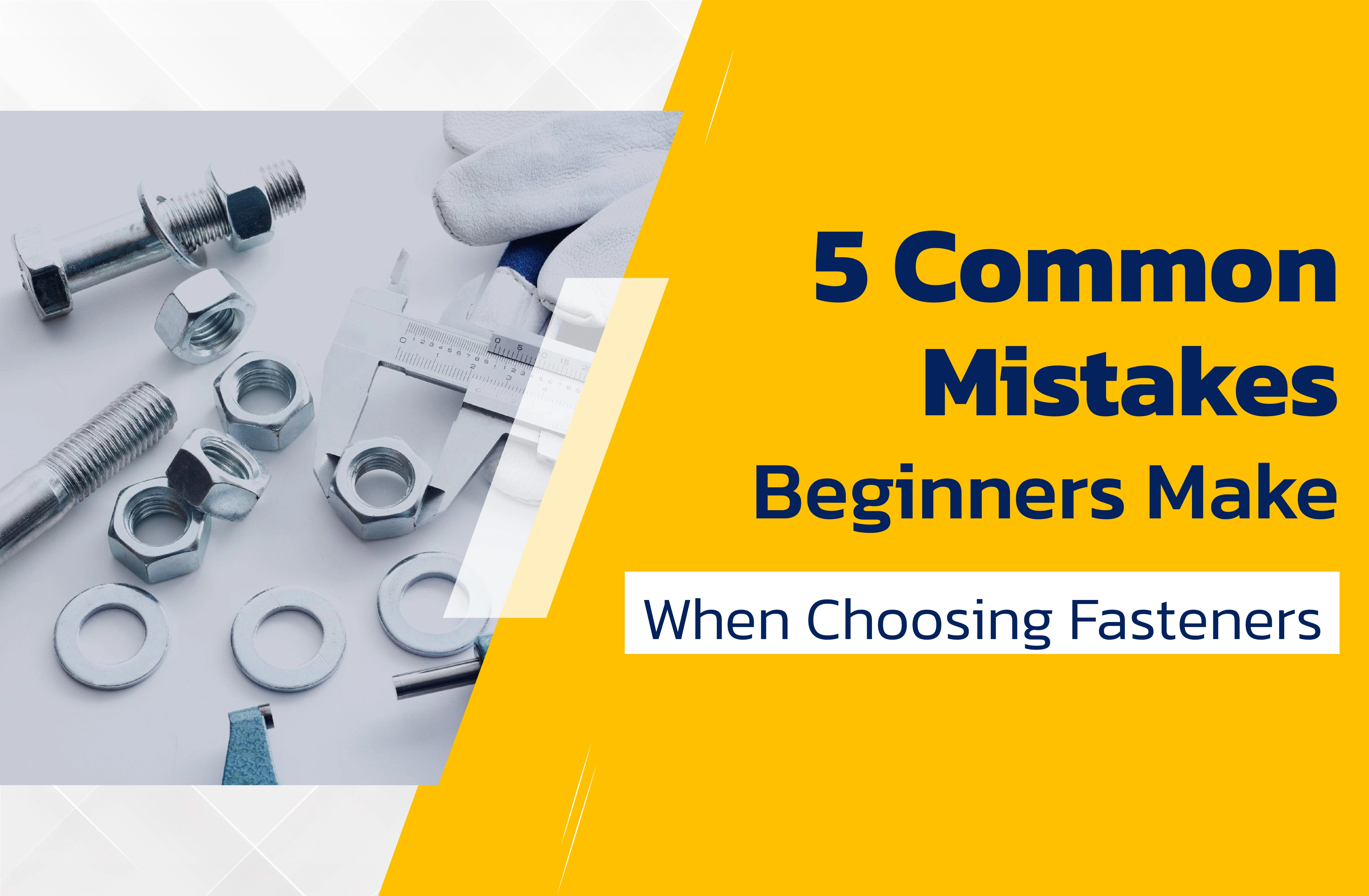
Screws, nuts, and bolts may seem like small components, but they play a crucial role in the strength, safety, and durability of any assembly. Choosing the wrong fastener can lead to problems such as damaged threads, premature rust, or improper application. This is especially common among beginners and DIY enthusiasts. In this article, we'll explore five common mistakes people make when selecting fasteners and share practical tips to help you choose the right fastener for the job, improving performance and reducing potential issues.
 ยาวไปอยากเลือกอ่าน
What Is a Fastener?

What Is a Fastener?
A fastener is a mechanical device used to connect or secure two or more components together, ensuring that structures, machinery, and equipment remain strong and stable. Fasteners come in various types—such as screws, bolts, nuts, washers, and studs—each designed to suit different applications. They are widely used in construction, industrial machinery, automotive engineering, electrical work, and manufacturing because they are essential components that make assemblies strong, safe, and easy to disassemble or maintain.
Why Is Choosing the Right Fastener Important?
Why Is Choosing the Right Fastener Important?
Although fasteners are small components, they play a vital role in the strength, safety, and efficiency of an assembly. Choosing a fastener that is poorly suited to the application or operating environment can lead to issues like loosening, wear, corrosion, or component breakage. Conversely, selecting the right fastener ensures efficient installation, handles the intended load capacity, and reduces the risk of machinery or structural damage. It also helps cut down on maintenance and replacement costs in the long run. Therefore, carefully evaluating the fastener's type, material, size, and strength grade to match the job is a crucial step that should never be overlooked.
5 Common Mistakes Beginners Make When Choosing Fasteners
5 Common Mistakes Beginners Make When Choosing Fasteners
Choosing the right fastener for the job is crucial and should not be overlooked. Although they are small components, they directly affect the strength, safety, and lifespan of the assembly. However, novice technicians or those without experience often make mistakes when selecting fasteners, which can lead to operational issues down the road.
CHOOSING THE WRONG TYPE OF FASTENER
Fasteners come in various types, such as screws, bolts, nuts, washers, and studs, each
designed for specific applications. Choosing the wrong type may affect fastening strength
and overall performance, making proper selection essential for reliable results.

CHOOSING MATERIALS UNSUITABLE FOR THE ENVIRONMENT
Fastener materials directly affect their lifespan. Choosing a material that is unsuitable for the environment can lead to rust or corrosion. Therefore, selecting the right material is essential to increase durability and extend service life.
CHOOSING BASED ON PRICE ALONE
Choosing fasteners based on price alone may reduce initial costs, but if the quality does not meet the required standards, it can affect performance and lead to additional maintenance, repair, or replacement costs in the future.

CHOOSING THE WRONG SIZE OR THREAD TYPE
Another common mistake is choosing a size or thread type that doesn't match the workpiece—whether it's the diameter, length, or thread system (such as metric and inch threads). Making the wrong choice can cause assembly failure, loose fastening, or damaged threads, requiring a component replacement.
OVERLOOKING THE STRENGTH GRADE
Different fasteners come in various strength grades such as 4.8, 8.8, 10.9, or 12.9, which directly impact their load-bearing capacity. Selecting a grade that is too low for high-load or high-vibration applications can cause the fastener to stretch, loosen, or snap during operation.

How to Choose the Right Fastener for Your Application.
How to Choose the Right Fastener for Your Application
Choosing the right fastener for its specific application is crucial for increasing the strength, safety, and lifespan of the workpiece. The following key factors should be considered:
Choose the Right Type of Fastener for the Application
Different types of fasteners serve different functions. For example, screws are ideal for general fastening, while bolts and nuts are suited for applications requiring high strength. Therefore, the selection should match the characteristics of the workpiece and its load requirements.
Choose the Right Material for the Operating Environment
The operating environment directly impacts the lifespan of a fastener. If used in areas with high humidity or exposed to water and chemicals, it is recommended to choose corrosion-resistant materials such as stainless steel or rust-resistant coated steel.
Verify the Correct Size and Thread
The diameter, length, and thread type should be chosen to match the workpiece. This ensures a perfect fit, reducing the risk of loosening or thread damage during use.
Choose the right strength grade
Different applications require different load-bearing capacities. Especially for machinery, structural work, and industrial applications, it is essential to choose a fastener with a strength grade that meets the specific requirements of the job.
Choose fasteners that meet industry standards
Select fasteners manufactured to standards such as DIN, ISO, ASTM, or JIS to ensure quality, accuracy, and safety, helping you choose the right fastener for reliable performance.
FAQ
Summary

Summary
Selecting the right fastener is essential for ensuring the strength, safety, and service life of any assembly. Although fasteners are relatively small components, choosing the wrong type, material, size, thread system, or strength grade can lead to loosening, corrosion, equipment failure, or structural damage. Before purchasing a fastener, it is important to carefully consider the application requirements, operating environment, and product standards. Choosing a high-quality fastener that is suitable for the job helps improve performance, reduce maintenance costs, minimize risks, and ensure long-term reliability and safety.
แชร์ :




Contact
Boonsan Fasteners Limited Partnership.
1874, 1874/1-3 Moo 4, Soi Narai 2,
Theparak Road, Mueang District,
Samut Prakan Province, 10270
Tel. : 02-026-6558
Open : 08.00-17.00 Mon-Sat
 Boonsanfast
  @boonsanfast
  www.boonsanfasteners.com
  ecom_order@boonsanfasteners.com
 Payment Method