My Cart


 All Products
 Fasteners

 Pneumatic Fittings
 Brass Fittings
 Hand tools

 Bearings and Grease
 Electrical Terminal


 Zinc Plating
 Nut and Screw
 Product Packaging


What Is the Difference Between Brass Fittings and Stainless Steel Fittings?
What Is the Difference Between Brass Fittings and Stainless Steel Fittings?
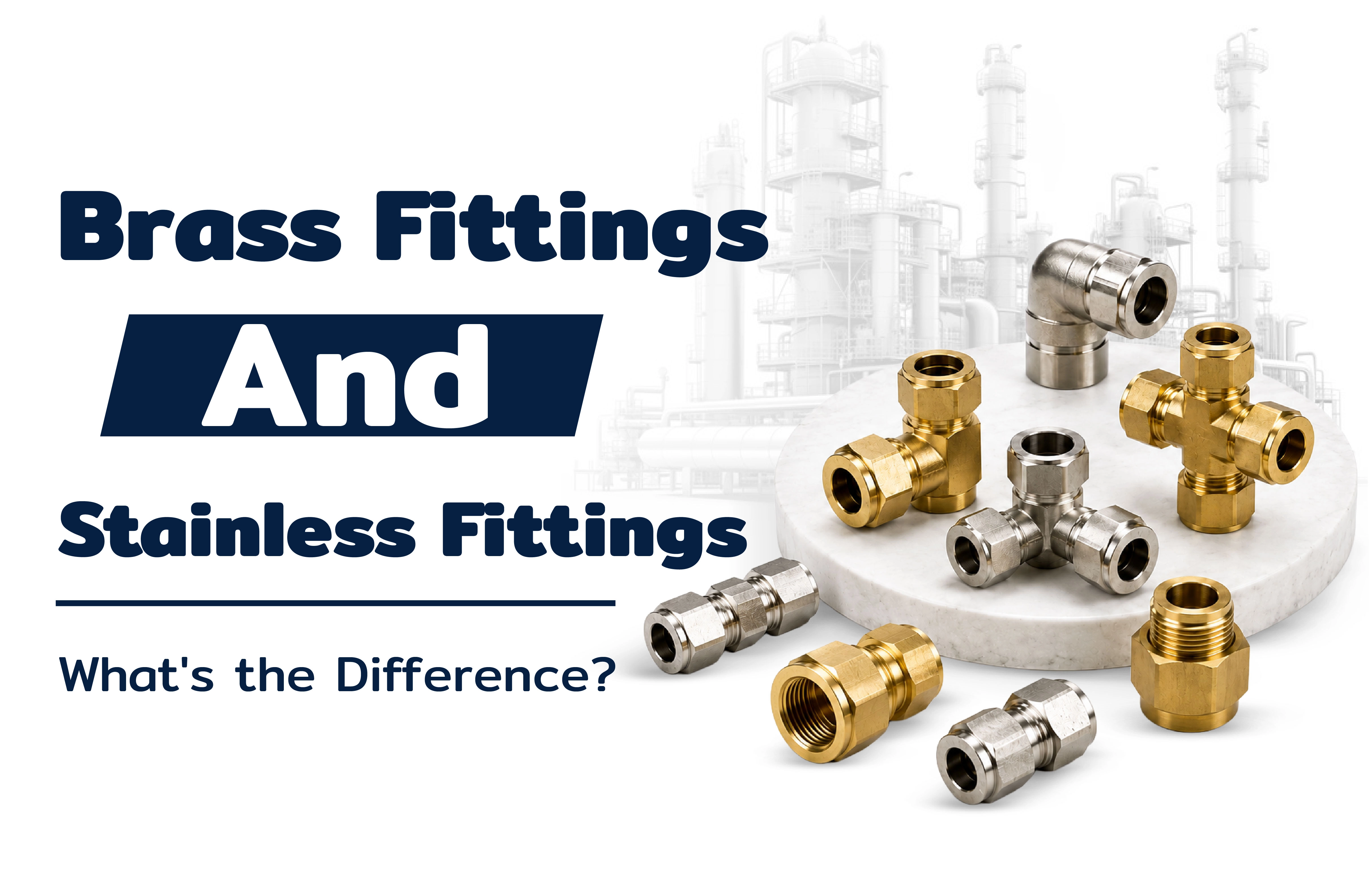
Fittings are essential components in piping, pneumatic, water, and various industrial systems. Their main function is to connect pipes or equipment together to ensure safe and efficient operation. While fittings are made from a wide range of materials, brass and stainless steel are the most widely used. Consequently, many people may wonder how these two materials differ and how to choose the most suitable option for their specific needs.
 ยาวไปอยากเลือกอ่าน
What Is a Brass Fitting?
What Is a Brass Fitting?
A brass fitting is a component used to connect, control, or redirect the flow of liquids, gases, and air within piping systems. It is made from an alloy of copper and zinc, offering excellent strength, durability, corrosion resistance, and ease of fabrication.Brass fittings are widely used in industrial applications, plumbing systems, pneumatic systems, and fluid transfer systems. They are available in various types, including straight fittings, elbow fittings, tee fittings, reducers, and threaded fittings, allowing users to select the most suitable option for their specific piping requirements.

What Is a Stainless Steel Fitting?
What Is a Stainless Steel Fitting?Stainless steel fitting is components used to connect, control, or redirect the flow of liquids, gases, and air within piping systems. Made from stainless steel, these fittings offer high strength, outstanding corrosion resistance, and the ability to withstand harsh environments. They also minimize the risk of leaks within the system, making them a popular choice for industrial applications that demand cleanliness, safety, reliability, and long-term performance. Key Advantages of Stainless Steel Fittings Stainless steel fittings offer excellent strength, corrosion and rust resistance, and the ability to withstand high temperatures and pressure. They are ideal for industrial applications that require durability, cleanliness, and long-term reliability. What Applications Are Stainless Steel Fittings Commonly Used For? Stainless steel fittings are commonly used in piping systems for food and beverage processing plants, pharmaceutical industries, chemical plants, clean water systems, steam systems, and industrial applications exposed to moisture, chemicals, or highly corrosive environments. |

What Is the Difference Between Brass Fittings and Stainless Steel Fittings?
What Is the Difference Between Brass Fittings and Stainless Steel Fittings? |
|
Although brass and stainless steel fittings share the same core function of connecting and controlling flow within piping systems, both materials possess distinct properties and suitability for different applications. Brass fittings stand out for their ease of forming, cost-effectiveness, and good corrosion resistance, making them ideal for water systems, compressed air lines, and general applications in industrial facilities. On the other hand, stainless steel fittings offer higher strength and superior resistance to rust, chemicals, moisture, and extreme temperatures. Consequently, they are best suited for applications requiring exceptional durability, such as food and beverage plants, pharmaceutical factories, chemical facilities, and industrial operations in harsh environments. In conclusion, if the priority is cost-efficiency in standard environments, brass fittings are the most appropriate choice. However, if high durability, corrosion resistance, and a long service life are required, stainless steel fittings are the superior solution. |
|
|
How to Choose the Right Fitting for Your Application
How to Choose the Right Fitting for Your ApplicationWhen choosing between brass fittings and stainless steel fittings, it is important to consider the application, operating environment, and type of fluid within the system, as each material offers different advantages For general-purpose applications such as water systems, air systems, and standard machinery, brass fittings are often a cost-effective and practical choice. However, for food processing, pharmaceutical, chemical industries, or environments with high moisture and corrosion exposure, stainless steel fittings provide superior durability, corrosion resistance, and longer service life, making them a better long-term investment. |
Why Do Factories Prefer Stainless Steel Fittings?
Why Do Factories Prefer Stainless Steel Fittings? |
|
Stainless steel fittings are widely used in industrial applications due to their strength, durability, and excellent resistance to demanding operating environments. They are well-suited for piping systems and machinery that require reliable performance and long-term service life. |
|
FAQ
FAQ |
|
Do brass fittings rust?
Brass has good corrosion resistance, but it may tarnish or deteriorate in harsh environments. |
|
Are stainless steel fittings better than brass?
It depends on the application. Stainless steel is better for heavy-duty or corrosive environments. |
|
Which should you choose : SUS304 or SUS316?
SUS304 is suitable for general applications, while SUS316 is ideal for marine and chemical environments. |
|
What type of fitting should be used for pneumatic systems?
Both brass and stainless steel fittings are suitable, depending on the operating conditions and environment. |
Summary
SummaryBrass and stainless steel fittings are essential components for connecting and controlling flow within piping systems, with each material offering distinct properties and suitability for different applications. Brass fittings stand out for their cost-effectiveness, ease of installation, and suitability for standard water, air, and gas systems. In contrast, stainless steel fittings provide high strength and superior resistance to corrosion, rust,chemicals, and high temperatures, making them highly popular in the food, beverage, pharmaceutical, chemical, and other industries that demand extreme cleanliness and durability. Therefore, selection should consider the operating environment, fluid type, and required lifespan to ensure the piping system operates with maximum efficiency, safety, and long-term value. |
แชร์ :




Contact
Boonsan Fasteners Limited Partnership.
1874, 1874/1-3 Moo 4, Soi Narai 2,
Theparak Road, Mueang District,
Samut Prakan Province, 10270
Tel. : 02-026-6558
Open : 08.00-17.00 Mon-Sat
 Boonsanfast
  @boonsanfast
  www.boonsanfasteners.com
  ecom_order@boonsanfasteners.com
 Payment Method