Home /
Article /
What is the difference between zinc plating and yellow zinc plating, and which applications are they suitable for?
What is the difference between zinc plating and yellow zinc plating, and which applications are they suitable for?
What is the difference between zinc plating and yellow zinc plating, and which applications are they suitable for?
An in-depth guide to zinc plating and rainbow zinc plating for screws, nuts, and bolts, including the differences between white zinc and rainbow zinc coatings, their suitable applications, and how effectively they protect against rust.
In industrial work, construction, and general installation projects, rust is one of the major factors that shortens the lifespan of fasteners. Screws, nuts, and bolts that are not properly protected can corrode over time, affecting the strength and reliability of the fastening system.
One of the most common methods of rust prevention is zinc plating, which is widely used for general-purpose and industrial fasteners. Among the most common finishes are white zinc plating and rainbow zinc plating. Although many people have seen these coatings, they may still be unsure about the differences between them and which type is more suitable for specific applications.
Screw plating (also known as fastener plating or screw coating) is the process of applying a metal or protective
coating to the surface of screws, nuts, bolts, and other fastener components to enhance their performance and
durability. The coating helps improve properties such as corrosion resistance, strength, wear resistance, appearance,
and suitability for specific environments.
In general, screws made from ordinary steel can rust easily when exposed to moisture, water, or chemicals.
Therefore, surface plating is necessary to extend service life and improve safety in various industries such as
construction, machinery, electrical systems, automotive applications, and steel structures.
What are white zinc plating and yellow zinc plating?
If you are looking for metric screws, click here:
Metric Screws
What is zinc plating?
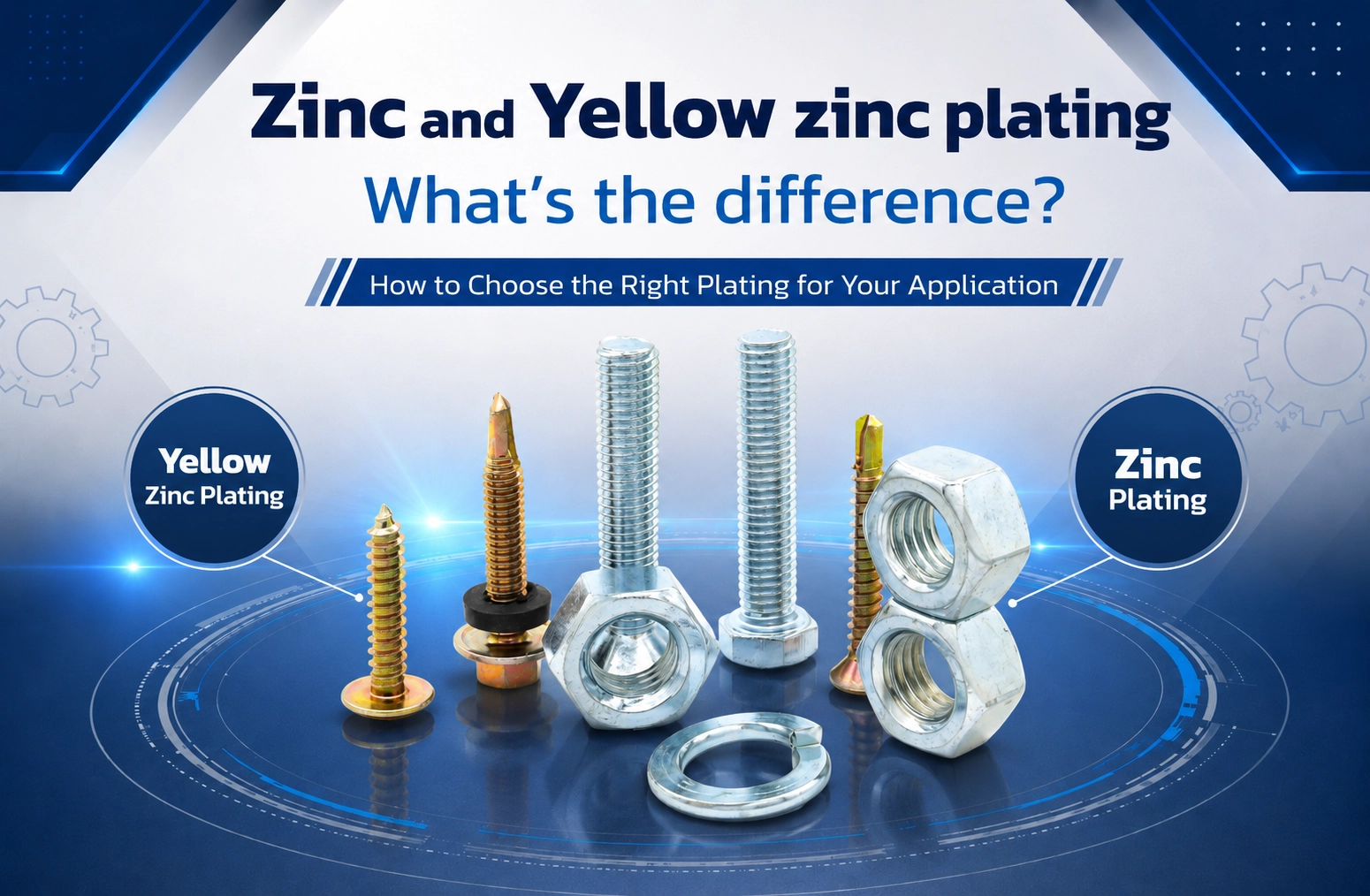
Zinc plating is a metal surface coating process that applies zinc to help prevent rust and reduce corrosion, resulting in a bright silver-white finish that looks clean and neat. The principle behind zinc plating is that the zinc layer acts as a protective barrier, preventing moisture and air from directly contacting the steel, thereby reducing rust formation and extending the service life of fasteners.
Key Advantages of Zinc Plating
Cost-Effective
Suitable for Indoor Use
Attractive finish with a clean appearance.
Readily Available
Limitations
Provides moderate rust protection and is not suitable for highly humid environments. Prolonged outdoor use may result in rust.
What is yellow zinc plating?
Yellow zinc plating is a metal surface coating process that applies a zinc layer followed by a chromate conversion coating, giving the metal surface an iridescent golden sheen that appears in shades of yellow, green, purple, or blue when reflecting light.This type of plating is commonly used on screws, nuts, bolts, washers, and various fastener components to provide rust protection, improve durability, and enhance the appearance of the surface finish.
Key advantages of yellow zinc plating
Provides better rust protection than white zinc plating.
Iridescent golden surface finish with an attractive appearance.
Longer service life.
Well-suited for industrial applications.
Limitations
Yellow zinc plating is suitable for general use but is not recommended for high-humidity environments, exposure to harsh chemicals, or coastal areas, as prolonged use may lead to rust.
Choosing the wrong fastener or plating type can lead to rust, shortened service life, or structural damage. Common mistakes include the following:
•
Choosing a plating type that is unsuitable for the environment.
•
Choosing fasteners based only on price without considering service life.
•
Selecting materials and plating types that do not match the application requirements.
•
Using fasteners outdoors while choosing a coating that does not provide sufficient corrosion protection.
•
Failing to check the plating standards and coating thickness.
Choosing the right fastener and plating type helps reduce rust problems, extend service life, and lower future maintenance costs. Therefore, before selecting a fastener, it is important to consider the environment, application type, strength requirements, and plating properties to ensure they match the actual usage conditions.
Which applications are suitable for white zinc plating or rainbow zinc plating?
When to Choose White Zinc or Rainbow Zinc Plating?
For indoor, furniture, or general installation work with minimal moisture exposure, white zinc is
a cost-effective choice—affordable, aesthetically clean, and sufficient for everyday use. For factory,
machinery, metalwork, or high-humidity environments requiring longer service life, rainbow zinc
plating is the better option, offering superior corrosion resistance and greater suitability for industrial
applications.
•
หมายเหตุ Note: For outdoor or highly corrosive environments, stainless steel fasteners are recommended
for maximum durability and long service life.
FAQ
FAQ
01
Is yellow zinc plating really more corrosion-resistant than white zinc plating?
In general, rainbow zinc plating provides better corrosion resistance than white zinc plating.
02
Can Zinc-Plated Fasteners Be Used Outdoors?
Yes, but for humid or permanent outdoor use, rainbow-plated or stainless steel options are recommended.
03
How long does white zinc plating last?
It depends on the environment — for indoor use, they can last many years.
04
What Type Should Be Used in Coastal Applications?
Stainless steel SUS316 fasteners are recommended as they offer superior corrosion resistance.
Summary
Summary
Zinc plating is one of the most popular rust-prevention methods for fasteners. White zinc is suitable for indoor and general-purpose use, while rainbow zinc offers better durability and corrosion resistance. Choosing fasteners that match the environment extends service life, reduces maintenance issues, and improves the safety of structures and machinery.


 My Cart


 All Products
 Fasteners

 Pneumatic Fittings
 Brass Fittings
 Hand tools
 Bearings and Grease
 Electrical Terminal


 Zinc Plating
 Nut and Screw
 Product Packaging


 ยาวไปอยากเลือกอ่าน


 Summary




 Boonsanfast
  @boonsanfast
  www.boonsanfasteners.com
  ecom_order@boonsanfasteners.com