My Cart


 All Products
 Fasteners

 Pneumatic Fittings
 Brass Fittings
 Hand tools
 Bearings and Grease
 Electrical Terminal


 Zinc Plating
 Nut and Screw
 Product Packaging


What are fastener standards? Which standard should you choose for your application?
What are fastener standards? Which standard should you choose for your application?
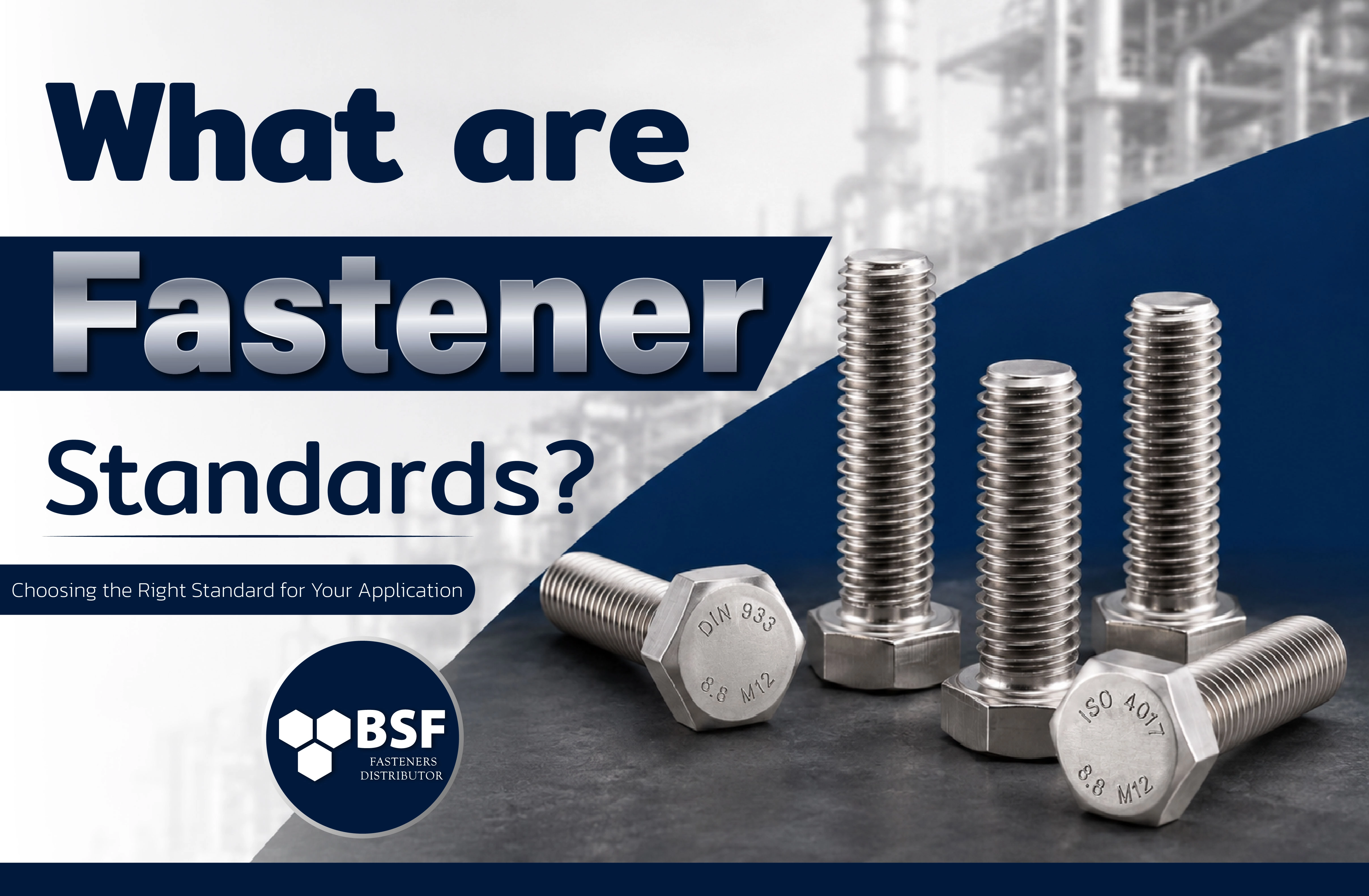
Understand the DIN, JIS, ANSI, and ISO standards for screws, nuts, and bolts, along with how to choose the right fastener standard for industrial, machinery, and engineering applications. In industrial, engineering, and machinery work, fastener standards are a critical factor in ensuring that screws, nuts, and bolts are used safely, securely, and with precise compatibility across various equipment.
 ยาวไปอยากเลือกอ่าน
What are fastener standards?

What are fastener standards?
Fastener standards are....
International technical specifications established by various standards organizations to serve as guidelines for the design, manufacture, and testing of fastening devices such as bolts, screws, nuts, rivets, and washers, ensuring that these components have identical dimensions, shapes, thread types, materials, and strength grades, allowing parts produced by different factories or countries to be assembled together precisely and safely.
What are DIN, JIS, ANSI, and ISO standards?
What are DIN, JIS, ANSI, and ISO standards?
DIN (Deutsches Institut für Normung) is an industrial standard from Germany, widely used in high-strength engineering and industrial a pplications worldwide.
Key Features of DIN Standards.
JIS (Japanese Industrial Standards) is an industrial standard from Japan, commonly used in Japanese machinery and equipment. Since many factories in Thailand use Japanese machinery, JIS fasteners are frequently found in the manufacturing industry.
Key Features of JIS Standards.
ANSI (American National Standards Institute) is an industrial standard from the United States. ANSI standards are commonly used with the inch measurement system and are typically found in machinery or equipment from America.
Key Features of ANSI Standards.
ISO (International Organization for Standardization) is a globally recognized standard that ensures consistent fastener production and use worldwide.
Key Features of ISO Standards.
How to Choose the Right Fastener Standard for Your Application?
How to choose the right fastener standard for your application?
Choosing the right fastener standard depends on the design specifications, type of machinery, and the industry's reference standard. DIN is commonly used for European machinery, JIS for Japanese equipment, ANSI for American machinery, and ISO is the internationally accepted standard worldwide. Selecting the correct standard ensures proper compatibility with other components, improves safety, reduces installation issues, and maximizes overall performance.
FAQ

FAQ
Can DIN and ISO standards be used interchangeably?
Some items are interchangeable, but always verify dimensions and standards before use.
What standard should be used for Japanese machinery?
JIS standard should generally be used to ensure thread and dimensional compatibility with the machinery.
What is the difference between ANSI and ISO?
ANSI uses inches; ISO uses metric and is the global standard.
Are fastener standards important?
Very important — they ensure fasteners can handle the correct load and be used safely.
Summary

Summary
DIN, JIS, ANSI, and ISO are fastener standards used to define the dimensions, thread specifications, and properties of screws, nuts, and bolts to ensure safe and precise use. Selecting the right standard for your machinery and application helps prevent damage, improves safety, and effectively extends the service life of equipment.
If you are looking for standard fasteners for industrial use, BSF Fastener is ready to provide expert guidance and distribute quality products, serving both B2B and B2C customers.
แชร์ :



Contact
Boonsan Fasteners Limited Partnership.
1874, 1874/1-3 Moo 4, Soi Narai 2,
Theparak Road, Mueang District,
Samut Prakan Province, 10270
Tel. : 02-026-6558
Open : 08.00-17.00 Mon-Sat
 Boonsanfast
  @boonsanfast
  www.boonsanfasteners.com
  ecom_order@boonsanfasteners.com
 Payment Method