My Cart


 All Products
 Fasteners

 Pneumatic Fittings
 Brass Fittings
 Hand tools
 Bearings and Grease
 Electrical Terminal

 Zinc Plating
 Nut and Screw
 Product Packaging


What are the differences between nuts, screws, and bolts?
What are the differences between nuts, screws, and bolts?
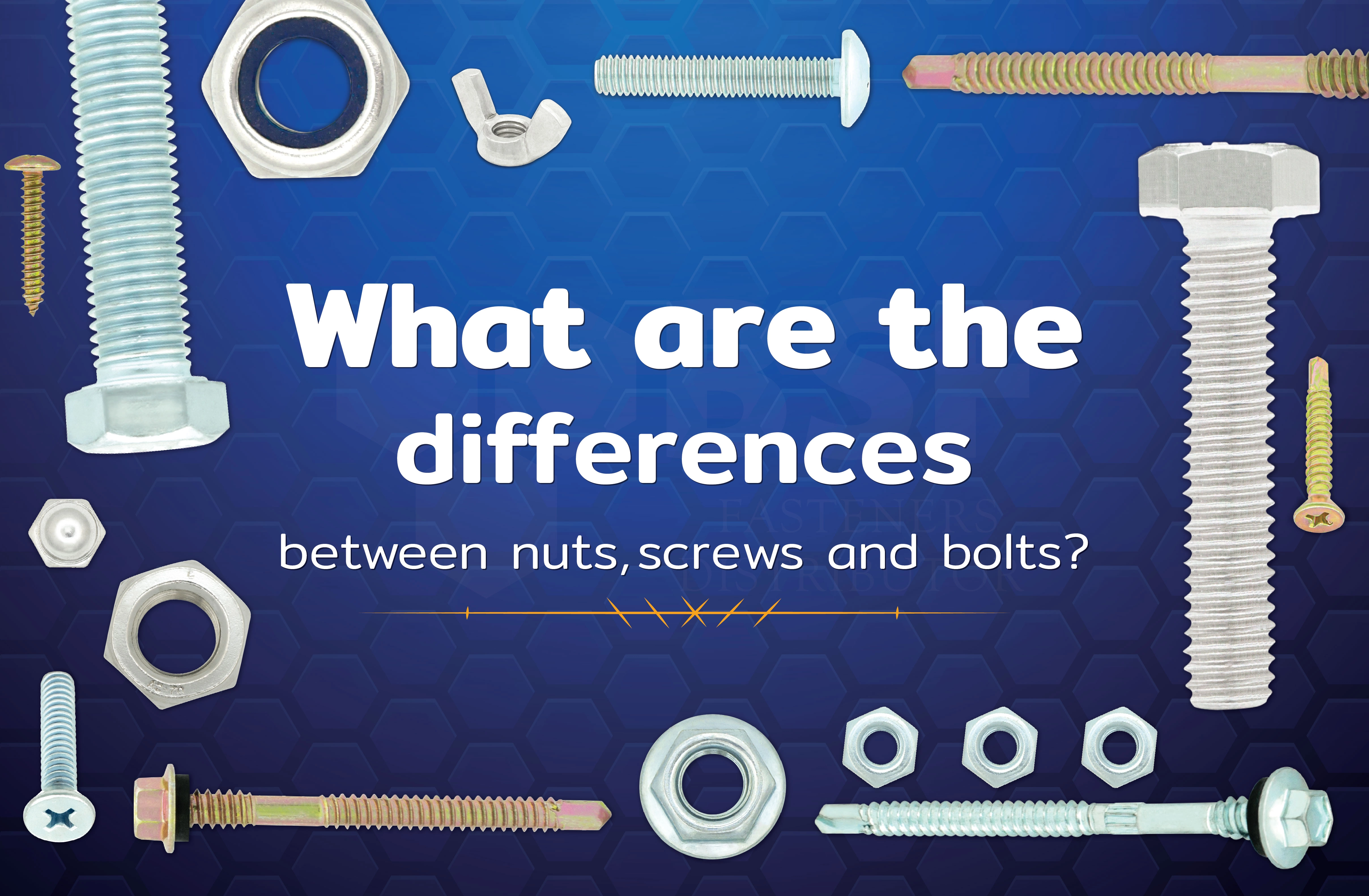
This article covers the characteristics, applications, and manufacturing materials of nuts, screws, and bolts. It also provides guidance on choosing the right fasteners for different types of work, from DIY projects to industrial applications.
Many people are often confused about the differences between nuts, screws, and bolts — what each one is, how they are used differently, and which type is best suited for their specific application. This article will help you clearly understand the differences so you can choose the right fasteners accurately and cost-effectively.
 ยาวไปอยากเลือกอ่าน
One Video Is All You Need! Nuts, Screws, or Bolts: Which One to Choose?

What is a screw?
 What is a screw? What is a screw?
A screw is a threaded fastener (with either full or partial threading) that can be driven directly into a material or used with a pre-tapped threaded hole. It is ideal for applications that require convenience and quick installation. Note : Some types of screws, such as socket screws or certain wood screws, are available in half-thread designs. Metric screws can also be used together with nuts in some applications. |

Example Product Image HWS
|
 Available in both fully threaded and partially threaded types. Available in both fully threaded and partially threaded types.
Fully threaded screws provide strong and secure fastening.
|
 Can be driven directly into the material. Can be driven directly into the material.
Can be used with wood, plastic, and thin metal without requiring additional nuts.
|
 Available in various head types. Available in various head types.
Including round head, flat head, hex head, and many more to suit different applications.
|
What is a bolt?

Example Product Image Hex Bolts
|
 What is a bolt? What is a bolt?
A bolt is a fastener with threads on only part of its shaft and is typically used together with a nut. It is designed to join two or more components together and is ideal for structural work, industrial machinery, and applications that require frequent assembly and disassembly. Its key characteristics include :
|
What is a nut?
 What is a nut? What is a nut?
A nut is a fastener used together with a bolt or screw to secure and tighten connections. It has a threaded hole in the center and is commonly used for locking bolts in structural applications, high-strength assemblies, and projects that require repeated assembly and disassembly. Its key characteristics include :
|

Example Product Image Hexagon Nuts
|
How to Choose the Right Fastener for Your Application
 How to Choose the Right Fastener for Your Application
FAQ
| Q : What is the difference between a screw and a bolt? | A : Screws can be driven directly into materials, while bolts are typically used together with nuts and are designed to withstand higher loads. |
| Q : What type of fastener should be used for outdoor applications? | A : Stainless steel screws or HDG-coated fasteners should be used to help prevent rust and corrosion. |
| Q : Are fastener standards important? | A : Yes, they are very important because they ensure safe load-bearing performance and precise compatibility with machinery and equipment. |
| Q : What type of stainless steel should be used for factory applications? | A : SUS304 is commonly used for general applications. For areas near the sea or environments with high corrosion, SUS316 is recommended. |
Summary
 Summary
Choosing the right type and material of fasteners from the beginning helps ensure strong and durable performance, reduces long-term issues and significantly lowers maintenance and repair costs. If you are still unsure which option is best, Boonsan Fastener team is ready to provide free consultation every day.
แชร์ :



Contact
Boonsan Fasteners Limited Partnership.
1874, 1874/1-3 Moo 4, Soi Narai 2,
Theparak Road, Mueang District,
Samut Prakan Province, 10270
Tel. : 02-026-6558
Open : 08.00-17.00 Mon-Sat
 Boonsanfast
  @boonsanfast
  www.boonsanfasteners.com
  ecom_order@boonsanfasteners.com
 Payment Method